Buffering film · 0%
HeliX Super Academy · floor film
One floor. Two species of operator.

Humans and humanoids,
type-rated together.
The Super Academy for Physical AI. Two student populations — human operators and robot fleets — trained in one instrumented institution, examined under injected failure, and certified for the places where consequence is physical.
Live floor telemetry · paired human & fleet ratings · failure injected every shiftTap to replay the opening film
- 5
- Levels, L1 Operator → L5 Assurance Authority
- 63
- Modules across three compulsory pillars
- 11
- Instrumented zones on a 320,000 sq ft flagship
- 12 mo
- Everything expires — recurrency by design
The insight
Two student populations. One institution.
Every existing robotics programme treats robots as equipment. HeliX enrols them — and neither credential is ever issued alone.
Human learners
- Admitted as
- Cohorts of 24, by level and vertical
- Curriculum
- Five levels, three pillars, four industry overlays
- Assessed by
- Practical examination on a live fleet, under injected failure
- Credential
- HeliX Type Rating — platform + environment, 12-month validity
Robot learners
- Admitted as
- Fleets of 4–40, by platform and vertical
- Curriculum
- Skill acquisition → sim2real → adversarial → assurance
- Assessed by
- Statistical performance envelope and a written safety case
- Credential
- HeliX Fleet Certificate — policy + environment, 12-month validity
A fleet certificate names the human ratings required to operate it; a human rating names the fleet classes it covers. That reciprocal lock is the product.
How it works
The loop that compounds
Failure is the curriculum. Bays are instrumented to inject faults, not to avoid them.
Humans demonstrate
Learners perform industrial tasks on teleoperation rigs. Every session is captured — force profiles, recovery behaviours, judgement at the edge of procedure.
Robots learn
Demonstrations train policies in the simulation core across thousands of randomised environments, not the one bay it happened in.
Robots are stress-tested
Sensor spoofing, degraded networks, ICS-level attack, mechanical fault injection, scripted human error.
Humans are examined
Assessed on supervising, intervening, diagnosing and recovering the fleet — under the failure modes found in step 3.
Both are certified together
The fleet certificate and the human type rating are issued as a matched pair, or not at all.
The evidence compounds
Each loop enriches the failure library, the policy repository and the assurance archive.
Sectors
Trained where the consequence is physical
Six critical-infrastructure environments, taught in the anchor partner's own control and safety stack.
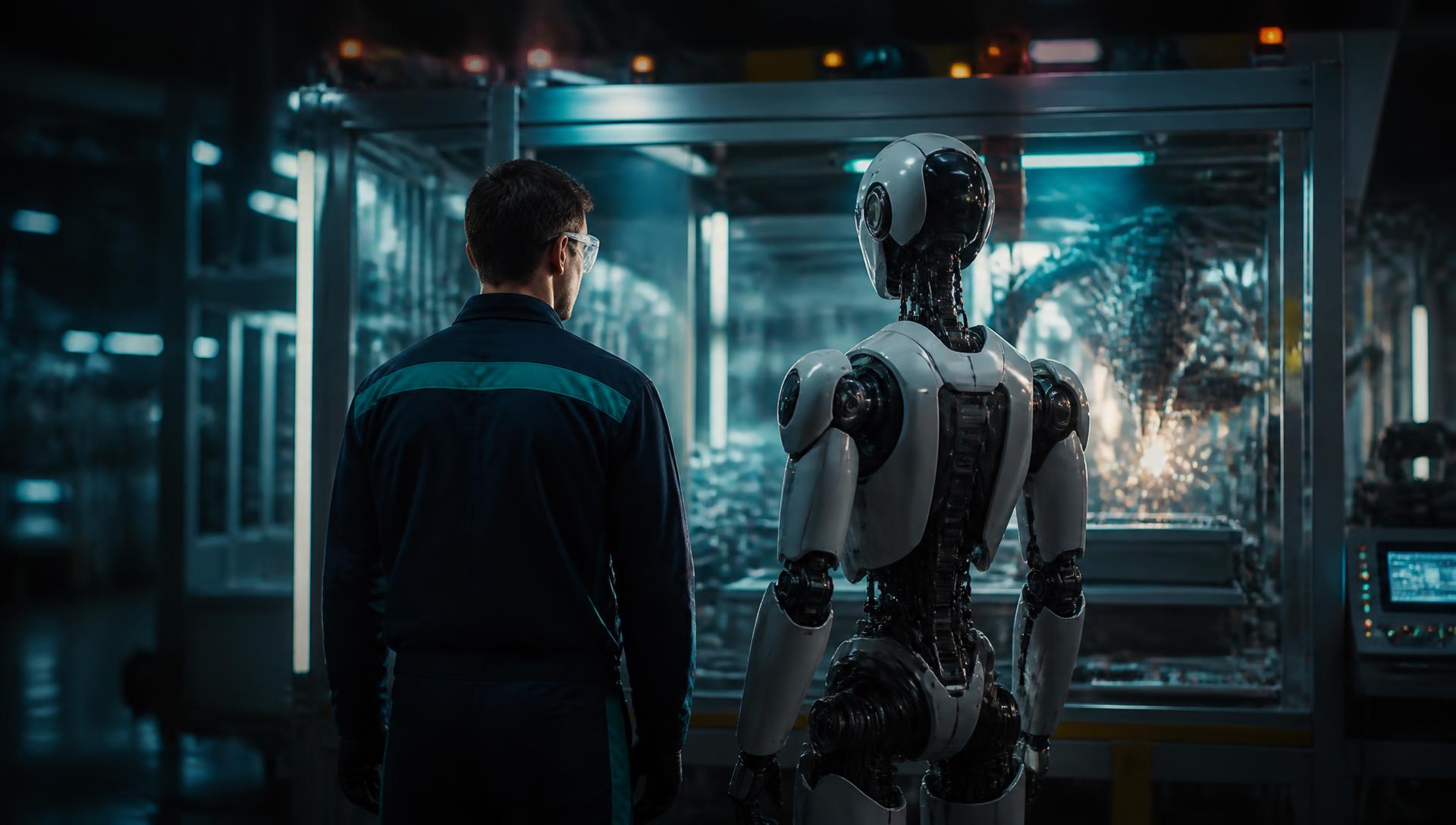
Zone 3 — The Line
Manufacturing & Logistics
Humanoids on the line beside the people who own the takt time. Conveyors, cobot cells, AMR traffic and a live WMS — on the anchor partner's own controllers.
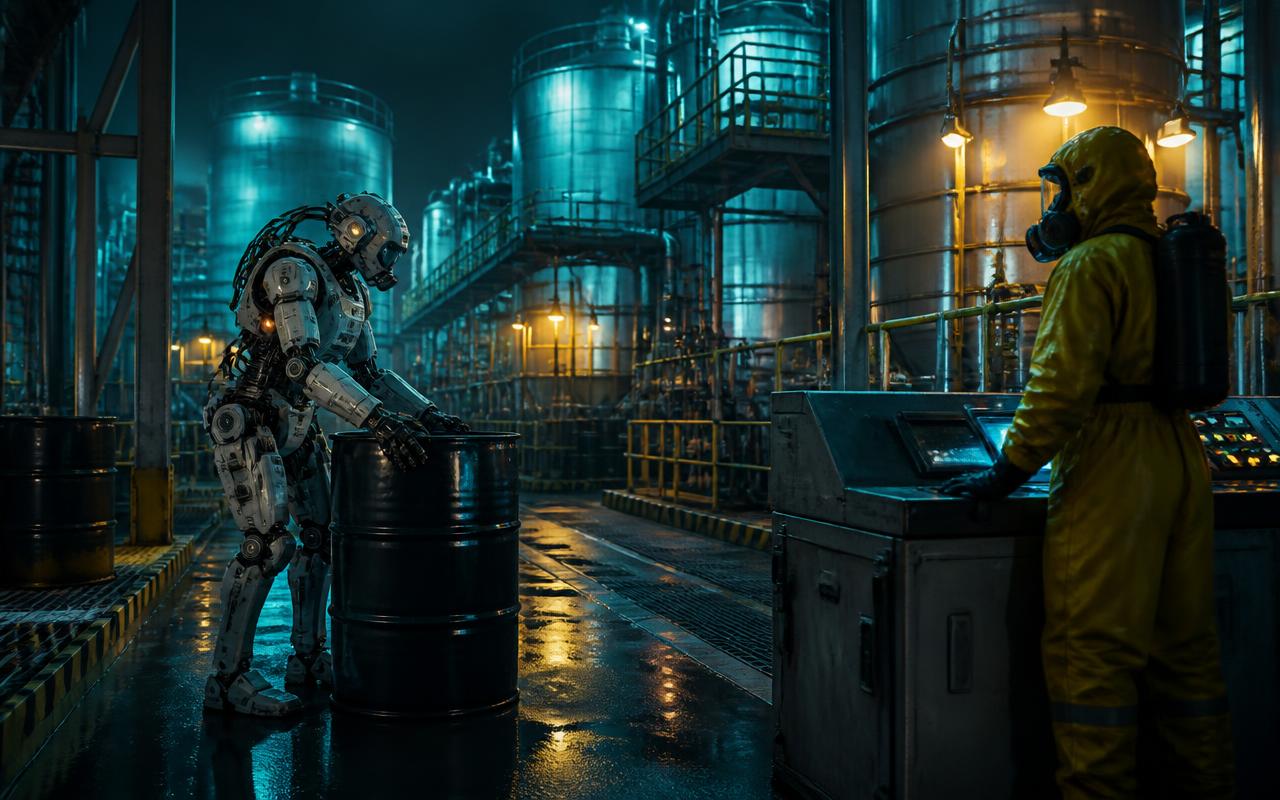
Zone 4 — The Grid (hazardous stream)
Dangerous Chemical Storage & Handling
Where the consequence of a wrong motion is a release, not a scrap part. Hazardous atmospheres, confined space entry, high-consequence material handling.
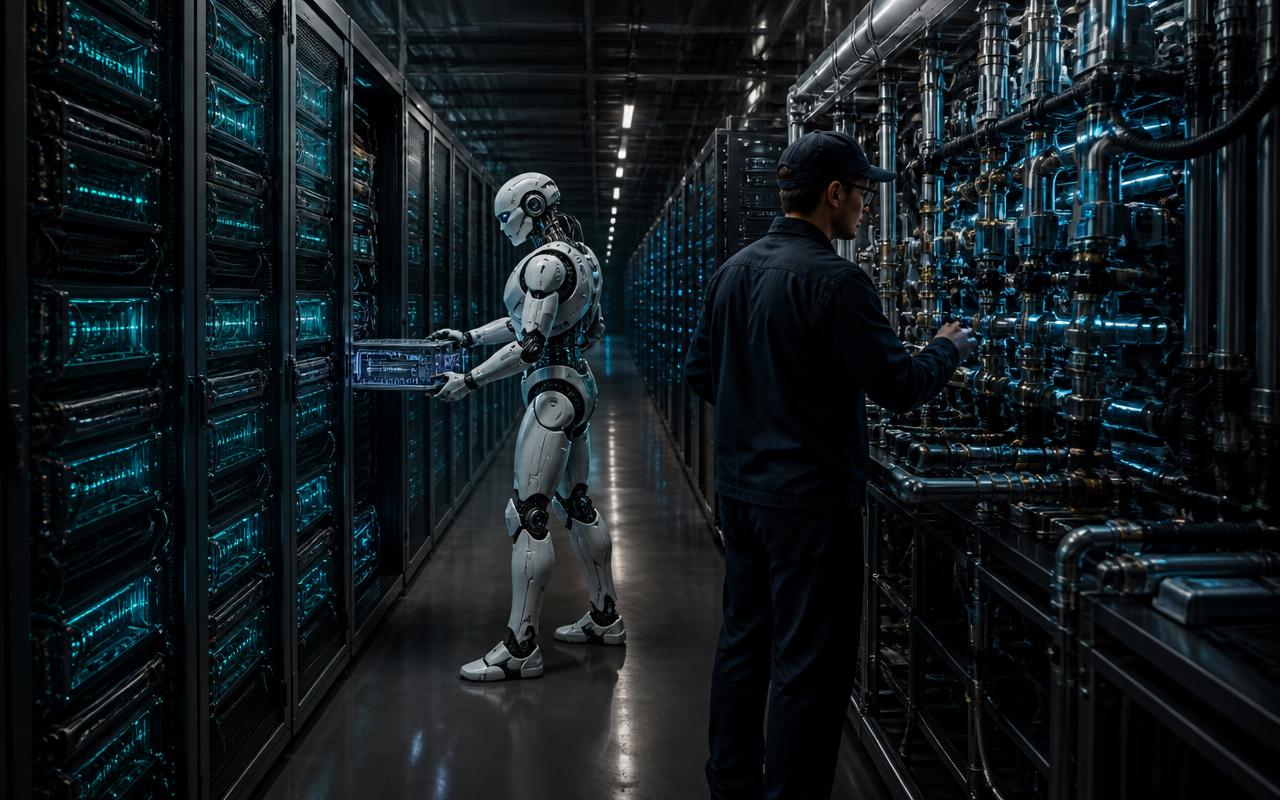
Zone 3/4 hybrid — Compute, Power & Cooling
AI Data Centre Operations
Power trains, cooling loops and compute handling. Humanoids swapping sleds and walking loops; humans holding the power and thermal envelope.
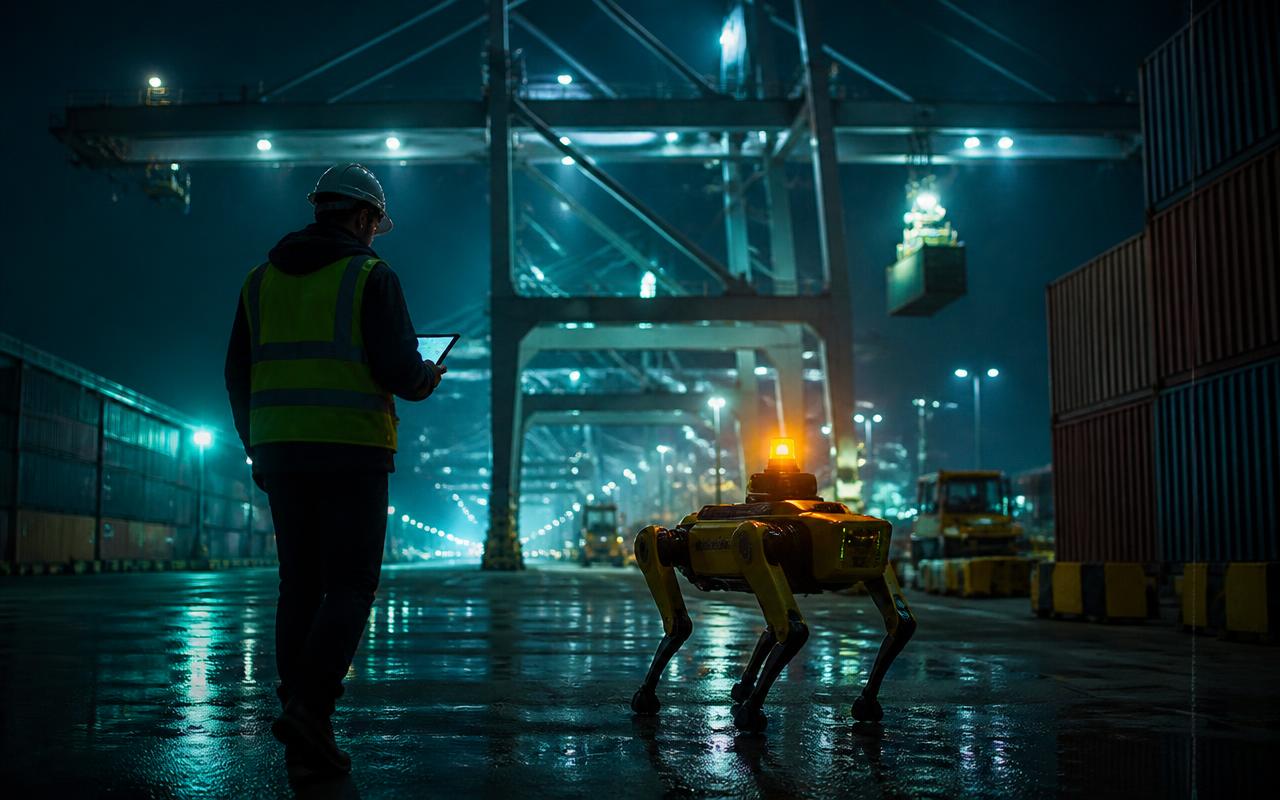
Zone 6 — The Perimeter (container yard)
Sea Ports & Cargo Handling
Container terminals, crane automation and yard inspection. Quadrupeds and humanoids in the yard; humans holding the traffic and the interlocks.
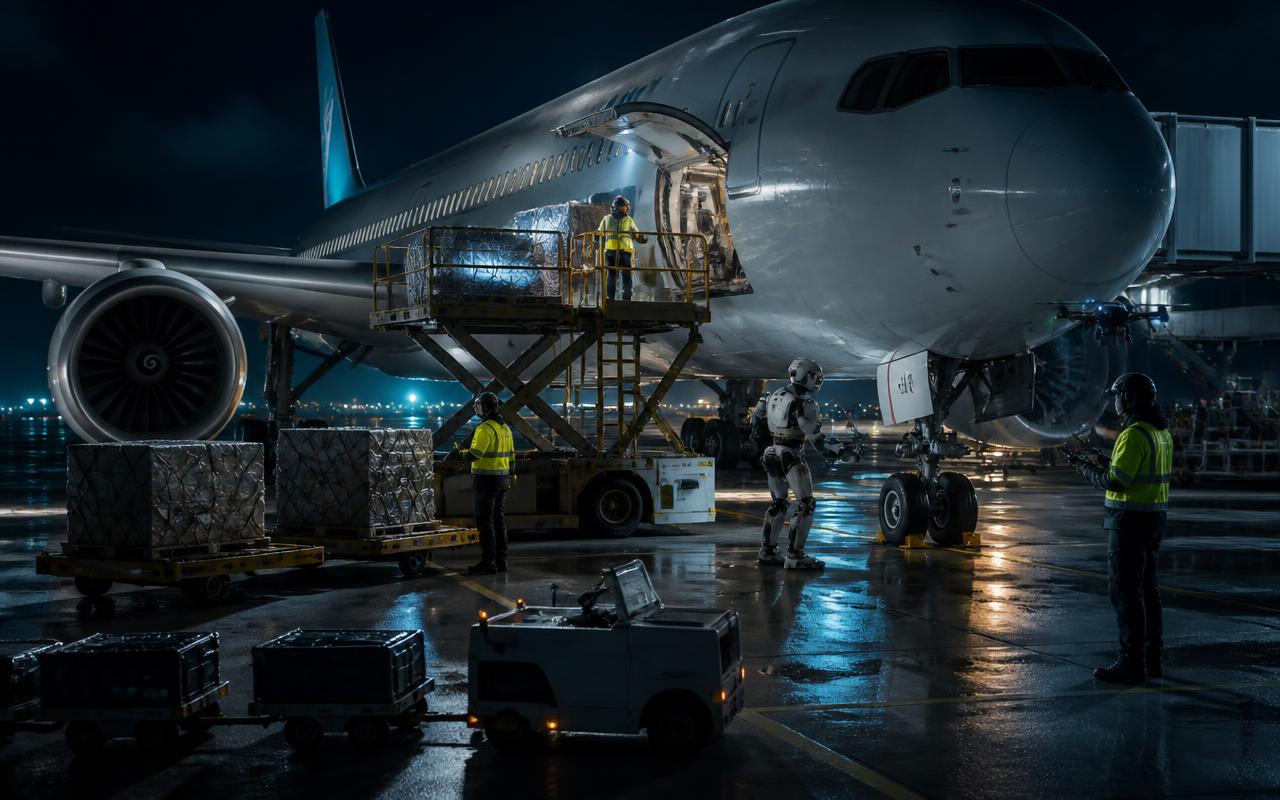
Zone 6 — The Perimeter (apron & UAV volume)
Airports, Ground Handling & MRO
Terminal operations, apron and ground handling, and MRO for airlines and airports — the vertical where type ratings were invented.

Zone 4 — The Grid
Energy Logistics, Vessels & Transmission
Vessel loading and discharge, marine maintenance and repair, substations and the transmission and distribution network.
The curriculum
Three pillars. Five levels. Four overlays.
No learner completes any track with less than a quarter of core hours in each pillar.
Applied AI & Foundation Models
The intelligence layer: how embodied policies are learned, evaluated, governed and kept honest. Deliberately light on architecture trivia and heavy on evaluation — the industry failure mode is not a badly chosen model, it is a model nobody could prove anything about.
14 modules
Cyber-Physical Security
Autonomy is an attack surface with actuators. IT security curricula stop at the data; robotics curricula never start on the adversary. Every module is taught in Zone 7, the cyber range, against equipment that moves.
14 modules
Physical AI & Embodied Systems
The metal: control, mechanics, simulation, fleet operations and the functional-safety practice that makes autonomy deployable. It carries the largest share of hours because it carries the largest share of the ways a deployment fails.
19 modules
Swipe table sideways →
| Level | Title | Weeks | Hours | Tuition |
|---|---|---|---|---|
| L1 | Fleet Operator | 6 | 250 | $9,500 |
| L2 | Physical AI Technician | 16 | 640 | $24,000 |
| L3 | Physical AI Engineer | 26 | 1,040 | $42,000 |
| L4 | Fleet Systems Architect | 20 | 760 | $56,000 |
| L5 | Assurance Authority | 14 | 532 | $68,000 |
The differentiator
Every physical lab is also a live cyber range
Autonomy converts every cyber incident into a kinetic one. Zone 7 mirrors the OT stack of every production zone and terminates in real motors, valves and interlocks.
Independent by construction
Examiners in Zone 9 report to the Safety & Assurance Board, not to faculty. They never examine a candidate they taught.
Accredited, not self-declared
ISO/IEC 17024 and 17065 pursued from Phase 0, alongside ISO 10218, ISO/TS 15066 and IEC 62443 alignment.
Sold to third parties
Insurers and regulators become customers of the credential — what an employer structurally cannot self-issue.
Anatomy of a type rating
HeliX L3-PAI / ENR / QUADRUPED-INSPECTION / SUBSTATION-ENERGISED
Examined 2026-11-14 · Examiner ID 0447 · Valid to 2027-11-14
Endorsements: confined-space entry · degraded-comms teleoperation · live blue-team response